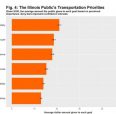
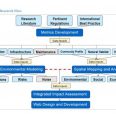
The purpose of this study is to utilize an innovative online engagement method to generate high quality and representative input from the public regarding priorities and ideas for the transportation network in Illinois.
Metropolitan Transportation Support Initiative (METSI), National University Rail Center (NURail)
To provide a better understanding of how the Capital Improvement Grant program works, this report traces the origins and history of the evolution of this funding program at the federal level, combined with a review of the program’s administration across different metropolitan areas around the country.
The purpose of this study is to estimate the fare elasticity from the reduction in ADA Special Services Paratransit fare from the present levels (suburban Cook and DuPage $3.00, Lake, Kane, McHenry and Will $2.50, city of Chicago $2.25, and various downstate fares – see Appendix Table B3) to a free fare.
The objective of this study was to produce a research report that provides IDOT with an analysis of the Illinois Maritime Transportation System in order to effectively plan, develop and implement maritime into a comprehensive statewide transportation system.
Center for Urban Transportation Research (CUTR), National Center for Freight and Infrastructure Research and Education (CFIRE)
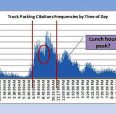
As an exploratory step toward addressing truck parking problems in urban areas, this study analyzed truck parking citation data in Chicago to identify factors that affect concentration of high density of violations.
The UTC team analyzed ridership data prior to and following the implementation of these programs. A survey of Senior Ride Free pass holders was conducted to understand travel behavior changes. Demographic trends in senior populations were used to estimate the potential future impact of the Senior Ride Free Program on transit systems.
The primary result is that there are many sociodemographic variables that exhibit a stronger association with obesity than sprawl. Disadvantaged neighborhoods have the highest BMI levels. In particular neighborhoods with low education levels, low income and high proportions of African Americans and Latinos are most likely to have high BMI levels. Conversely the North Shore communities of Kenilworth, Glencoe and Winnetka have the lowest BMIs. In the city of Chicago the Lincoln Park and Gold Coast areas have the lowest BMIs.
Midwest Regional University Transportation Center, University of Wisconsin-Madison
This project will provide insights into the asset management practice at a handful of MPOs with an eye on transferring the lessons learned to other regions and to highlight any improvements that can be made to the existing state of practice in these regions.
At the current time, several transit agencies around the country are making use of Bus on Shoulders (BOS) as an operating strategy. Pace Suburban Bus has conducted preliminary feasibility work on this topic and has identified several corridors where such a strategy might relieve congestion in the Chicago metropolitan area. However, a more detailed study is required to evaluate institutional issues related to BOS operations and design in the Chicago metropolitan area and potentially identify facilities where BOS strategies can be implemented.
Metropolitan Transportation Support Initiative (METSI)
The purpose of this report is to present information and stimulate discussion by focusing on the period since 2000 to assess where growth is occurring in the Chicago area, as well as the scale of the changing dynamics in urban growth. Specifically, we will re-examine our proposition that while sprawl is facilitated by the transportation system, the level of prosperity is a major factor in the degree and pace of sprawl.
This project undertook a systematic effort to place TTP evaluation on a more professionally recognizable and practically implementable footing. The project was conducted as a two track design in which the first track provided a framework for evaluation while the second undertook basic analysis of existing CPS TTP data.
Researchers set out to demonstrate how selection among different types of station coverage infrastructure may mitigate the loss of ridership due to extreme weather.
The scope of this project is the transfer to NAVTEQ of a prototype system of the effects of special events, weather and construction-related delay aspects of the travel time prediction component of a Dynamic Traveler Information System.
Develop a viable ranking methodology and measurement process that will give planners a resource to best allocate funds to be used for projects designed to improve the environment for pedestrians and cyclists
Illinois Department of Transportation(IDOT), Metropolitan Transportation Support Initiative (METSI)
Conduct an evaluation of the Longitudinal Employer-Household Dynamics (LEHD) Data for the Chicago region as an alternative (to CTPP) data source for transportation planning.
Illinois Department of Transportation, Chicago Metropolitan Agency for Planning
This project will produce transportation management templates for use in the event of a major transportation system disruption, which can result from vehicle crashes, hazardous material spills, terrorist attacks, or other similar events. The template will incorporate ways to:
1) Maintain traffic flows.
2) Minimize secondary incidents.
3) Reduce system congestion.
Federal Transit Administration of the U.S. Department of Transportation, Community Transportation Association of America
The JARC program was funded by the Transportation Equity Act for the 21st Century to support transportation services for low-income people, including those transitioning from public assistance to work. This multi-year UIC project looks at program targeting of JARC funds to states and local government and indicators for outputs such as rides provided as well as outcome measures of riders in the labor market.
This study’s goal is to develop an analytical framework to apply the CGE model in the analysis of freight mode shifts through the simulations of plausible impacts of such change. The framework developed in this study can also be applied to the analysis of the effects of fuel price increase or policy measures such as carbon tax
Illinois Transportation Research Center, Illinois Department of Transportation
This project explores these opportunities and through literature review, interviews, surveys, field observation and field-testing develops recommendations to IDOT for the acquisition and use of these technologies. Evaluation criteria will be identified and an evaluation methodology developed in the course of the project.