The purpose of this study is to estimate the fare elasticity from the reduction in ADA Special Services Paratransit fare from the present levels (suburban Cook and DuPage $3.00, Lake, Kane, McHenry and Will $2.50, city of Chicago $2.25, and various downstate fares – see Appendix Table B3) to a free fare.
At the current time, several transit agencies around the country are making use of Bus on Shoulders (BOS) as an operating strategy. Pace Suburban Bus has conducted preliminary feasibility work on this topic and has identified several corridors where such a strategy might relieve congestion in the Chicago metropolitan area. However, a more detailed study is required to evaluate institutional issues related to BOS operations and design in the Chicago metropolitan area and potentially identify facilities where BOS strategies can be implemented.
Metropolitan Transportation Support Initiative (METSI)
The purpose of this report is to present information and stimulate discussion by focusing on the period since 2000 to assess where growth is occurring in the Chicago area, as well as the scale of the changing dynamics in urban growth. Specifically, we will re-examine our proposition that while sprawl is facilitated by the transportation system, the level of prosperity is a major factor in the degree and pace of sprawl.
This project undertook a systematic effort to place TTP evaluation on a more professionally recognizable and practically implementable footing. The project was conducted as a two track design in which the first track provided a framework for evaluation while the second undertook basic analysis of existing CPS TTP data.
Develop a viable ranking methodology and measurement process that will give planners a resource to best allocate funds to be used for projects designed to improve the environment for pedestrians and cyclists
Federal Transit Administration of the U.S. Department of Transportation, Community Transportation Association of America
The JARC program was funded by the Transportation Equity Act for the 21st Century to support transportation services for low-income people, including those transitioning from public assistance to work. This multi-year UIC project looks at program targeting of JARC funds to states and local government and indicators for outputs such as rides provided as well as outcome measures of riders in the labor market.
Metropolitan Transportation Support Initiative (METSI)
The purpose of this report is to examine the transportation costs of sprawling places in the context of the housing-transportation cost trade-off. The line of reasoning within this study stems from the housing-transportation trade-off. The proposition is that households have a portion of their budget that they allocate to the sum of housing and transportation costs.
The research for this paper has been guided by this goal: everyone in the Chicago area should have integrated, ubiquitous and affordable mobility options, while public and private resources are used efficiently and effectively toward that end.
Center for Urban Transportation Research at the University of South Florida, University of Illinois at Chicago Chancellor’s Discovery Fund for Multidisciplinary Research
The aim of this empirical study is to provide policy insights into integrating EV infrastructure development with transit systems. While the existing EV charging structure has often been driven by the private sector to facilitate EV adoption, this study promotes transit uses and EV adoption at the same time. With a focus on multi-modal trips, this study explores opportunities related to underutilized parking spots that are suitable for both EV charging and transit connections, either on site or in proximity to transit stations.
Metropolitan Transportation Support Initiative (METSI), Center for Transportation Research (CUTR)
The objective of this study was to examine ways in which integrating transportation modes may improve mobility in the region. The study is needed due to the high levels of congestion on roadways in northeastern Illinois.
Illinois Department of Transportation (IDOT), Metropolitan Transportation Support Initiative (METSI)
Assist McHenry County staff and consultant to investigate the non-automobile needs of McHenry County residents and workers. This entails the following:
1. Overcome existing mobility barriers.
2. Connect to the regional transit network.
3. Improve options for accessing jobs.
National Center for Mobility Management, Federal Transit Administration
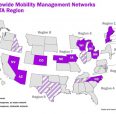
It was the objective of this report to shed light on these mobility management networks at the state level with the help of an electronic survey of state mobility managers and affiliated stakeholders. The survey was sent to 49 transportation professionals, each representing a different state. A key finding: Strong political backing is necessary as evidenced by the fact that most networks were brought into existence with legislative action, with the network being led by the respective state DOTs.
The study reveals how some alternative modes’ travel information are limited or unavailable in the traditional travel time skim matrix, which must be taken in to account in our mode choice models. Also, statistics regarding available alternatives and the constraints people encounter when making a choice are presented and considered accordingly. In order to examine the importance of accurate alternative information for mode choice modeling, two mode choice models were then developed for comparison
This report provides a descriptive summary and assessment of aggregate survey responses. Findings are presented in four parts: recent experience with extreme weather; perception of weather and climatic risks; assessment of organizational priority, capacity and challenge of managing extreme weather; organizational responses and adaptation to extreme weather events.
Cook County’s fatality rate per population was only exceeded by three other counties Williamson, Kankakee and Effingham. In suburban Chicago, McHenry and DuPage had fatality rates less than one-third of the rate in Cook County. On a national scale, DuPage has the second lowest rate among counties with over half a million people. When the degree of walking is considered Cook County falls within the middle of the Chicago-area counties. The lowest rates are in DuPage and Will Counties and the highest are in Kane and Will Counties.
Center for Urban Transportation Research (CUTR), National University Rail Center (NURail), Metropolitan Transportation Support Initiative
The objective of this study was to contribute to the still limited research on pedestrian and cyclist safety at rail grade crossings by expanding the scope of a previous study (Metaxatos and Sriraj, 2013) to include rail grade crossings in metropolitan Chicago with rail operations by the Chicago Transit Authority.
This report represents a snapshot of the impact of the intended coordinated Human Services Transportation planning throughout Illinois to date, and discusses promising practices, enduring issues and challenges, and provides recommendations for potential enhancements.